

Provincial Gambling Rules
South Africa's nine provincial gambling authorities issue licences, inspect venues, collect gambling taxes and enforce local rules. The National Gambling Act supplies the national norms they apply alongside provincial legislation.
National and Provincial Powers
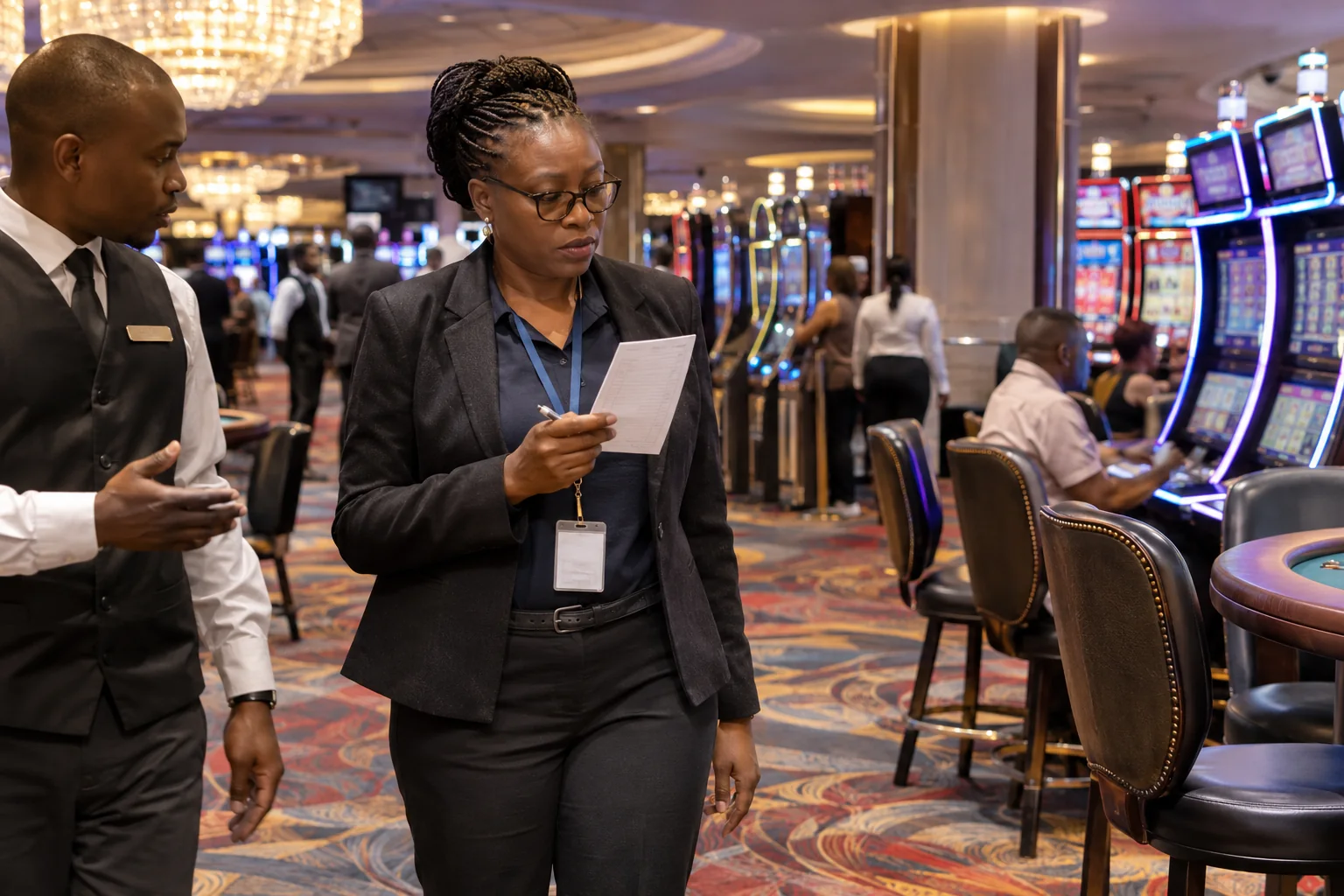
The Constitution gives national and provincial governments concurrent authority over gambling. Each of the nine provinces has its own legislation and licensing body, so application and operating rules can differ by location.
Each provincial licensing authority operates as an autonomous juristic organ of state, accountable to the provincial Member of the Executive Council (MEC) responsible for economic development and finance. Provincial boards retain discretionary authority to grant, amend, suspend, or revoke commercial gaming licenses within their territorial borders.
The Nine Provincial Licensing Authorities

Across the nine provinces of South Africa, dedicated statutory authorities administer the provincial gaming acts:
- Gauteng Gambling Board (GGB): Established under the Gauteng Gambling Act 4 of 1995, overseeing South Africa's most lucrative gambling market, including major resort venues Montecasino, Emperors Palace, and Carnival City.
- Western Cape Gambling and Racing Board (WCGRB): Governed by the Western Cape Gambling and Racing Act 4 of 1996, recognized for stringent online bookmaking licensing standards, overseeing GrandWest Casino and retail wagering.
- KwaZulu-Natal Gaming and Betting Board (KZNGBB): Operates under the KwaZulu-Natal Gaming and Betting Act 8 of 2010, managing Suncoast Casino, Sibaya Casino, and extensive provincial horseracing infrastructure.
- Eastern Cape Gambling Board (ECGB): Administers the Eastern Cape Gambling Act 5 of 1997, overseeing Boardwalk Casino in Gqeberha and regional limited payout machine route networks.
- Free State Gambling, Liquor and Tourism Authority (FSGLTA): Regulates gaming under the Free State Gambling and Liquor Act 6 of 2010, balancing casino concessions with rural gaming machine deployments.
- Mpumalanga Economic Regulator (MER): Created through the consolidation of the gaming and liquor boards under the Mpumalanga Economic Regulator Act 2 of 2017, regulating venues such as Emnotweni and Graceland.
- Limpopo Gambling Board (LGB): Regulates casino operations and bookmaking venues under the Limpopo Gambling Act 3 of 2013, overseeing Meropa Casino in Polokwane.
- North West Gambling Board (NWGB): Administers gaming in the North West under the North West Gambling Act 2 of 2001, home to the Sun City resort complex.
- Northern Cape Gambling Board (NCGB): Manages limited casino allocations under the Northern Cape Gambling Act 3 of 2004, including Flamingo Casino in Kimberley.
Provincial Primacy in Licensing
The National Gambling Board holds no statutory power to issue, suspend, or revoke commercial casino or bookmaker licenses. That authority rests exclusively with the relevant provincial licensing board possessing territorial jurisdiction over the operator.
Provincial Licence Types and Vetting
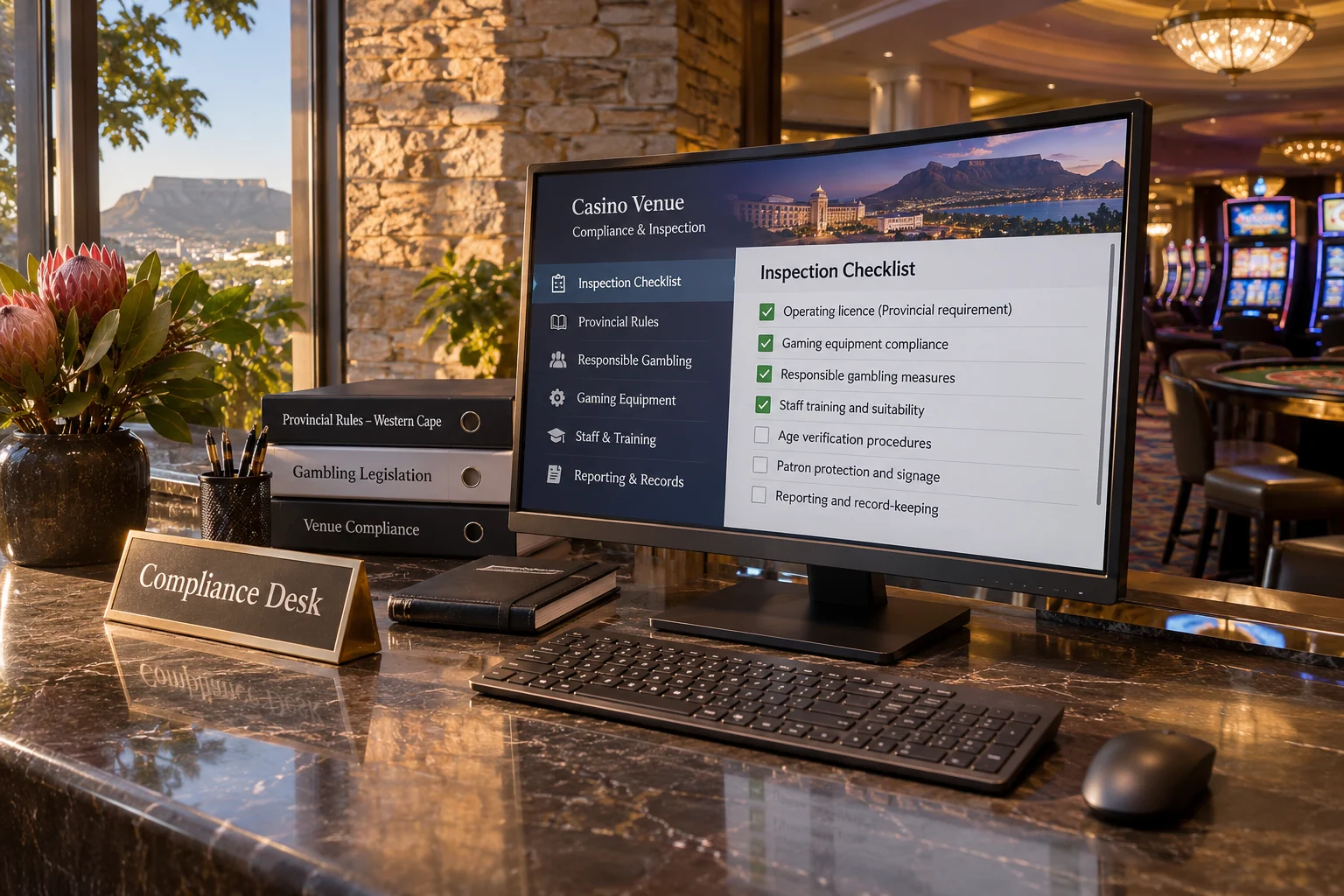
Provincial statutes delineate multiple distinct license categories, each subjected to application standards:
- Casino Operator Licenses: Concessions authorizing large-scale land-based resort developments encompassing slot machines, live gaming tables, hotels, and entertainment complexes.
- Bookmaker and Online Wagering Licenses: Authorizations allowing the acceptance of fixed-odds bets on sports, horseracing, and approved lotto-draw contingencies, both across retail counters and through interactive digital applications.
- Manufacturer, Maintenance, and Supplier Licenses: Mandatory permits for entities manufacturing, selling, servicing, or importing gaming hardware, slot machines, and monitoring systems.
- Totalisator Licenses: Monopolistic pool betting permits, historically managed by Phumelela (now 4Racing) and Gold Circle, linking horseracing pools nationally.
- Limited Payout Machine (LPM) Route Operator Licenses: Concessions allowing the deployment of low-stake gaming machines (maximum bet R5, maximum payout R500) in pubs, taverns, and clubs.
Cross-province betting and disputes
Can a bookmaker licensed in the Western Cape accept bets from players in Gauteng?
A bookmaker's online reach depends on its provincial licence and applicable law. Confirm the authorised products and locations with the issuing board; a provincial licence does not by itself approve every form of wagering.
How do provincial boards verify the integrity of slot machines?
Slot machines must comply with national standard SANS 1718. Every machine model must receive certification from an accredited testing laboratory (such as GLI Africa) and must connect directly to the national Central Electronic Monitoring System (CEMS) to track real-time revenue and payouts.
What should a player do if an authorized provincial casino refuses to pay a valid wager?
The player has a statutory right to lodge a formal complaint with the relevant provincial gambling board. The board will dispatch an inspector, examine surveillance footage and electronic logs, and issue a binding administrative ruling.
Provincial Gambling Taxes
Gambling taxes constitute a substantial portion of provincial own-source revenue. Because taxation rates are determined by provincial legislatures, tax structures vary across regional jurisdictions.
In Gauteng, casino gaming revenue is taxed on a graduated scale based on gross gaming revenue (GGR), ranging from 9% to 15%. In contrast, the Western Cape applies a progressive tax schedule reaching up to 20% on high-earning casino properties. Sports betting and horse racing levies are similarly apportioned, with a statutory percentage allocated to provincial revenue funds and a fraction redirected to the National Responsible Gambling Programme.
| Province and Regulatory Authority | Governing Provincial Act | Casino Allocation Cap | Bookmaker and Betting Mandate |
|---|---|---|---|
| Gauteng (GGB) | Gauteng Gambling Act 4 of 1995 | 7 Concessions (Montecasino, Emperors Palace) | Active - Major national digital hubs |
| Western Cape (WCGRB) | WC Gambling & Racing Act 4 of 1996 | 5 Concessions (GrandWest, Golden Valley) | Active - Stringent technical audits |
| KwaZulu-Natal (KZNGBB) | KZN Gaming & Betting Act 8 of 2010 | 5 Concessions (Suncoast, Sibaya, Golden Horse) | Active - Significant racing and bookmaking |
| Eastern Cape (ECGB) | Eastern Cape Gambling Act 5 of 1997 | 5 Concessions (Boardwalk, Queens Casino) | Active - Retail and digital bookmakers |
| Free State (FSGLTA) | FS Gambling & Liquor Act 6 of 2010 | 4 Concessions (Windmill, Naledi) | Active - Regional licensed operators |
| Mpumalanga (MER) | MER Act 2 of 2017 | 4 Concessions (Graceland, Emnotweni) | Active - Broad bookmaker registry |
| North West (NWGB) | North West Gambling Act 2 of 2001 | 5 Concessions (Sun City, Carousel, Rio) | Active - Resort-centric operations |
| Limpopo (LGB) | Limpopo Gambling Act 3 of 2013 | 3 Concessions (Meropa, Khoroni, Thaba Moshate) | Active - Focused commercial registry |
| Northern Cape (NCGB) | Northern Cape Gambling Act 3 of 2004 | 3 Concessions (Flamingo Casino) | Active - Retail footprint focus |
Table 3: Comparative jurisdictional matrix of South African provincial gambling boards.
Venue Audits and Inspections
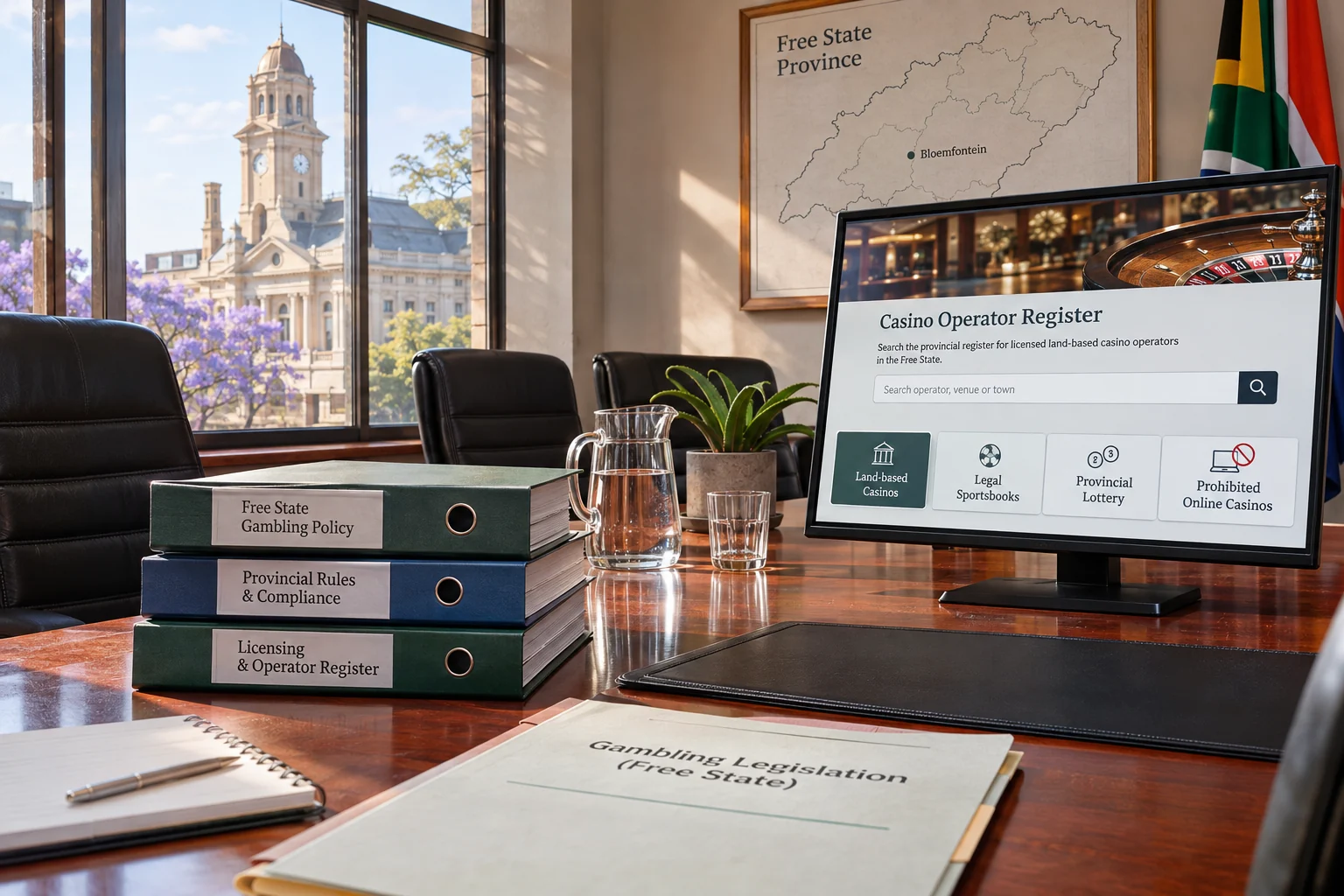
Provincial inspectors audit licensed venues, including surveillance, cash handling and gaming equipment. Their powers and procedures come from the relevant provincial law.
For digital bookmakers, provincial regulators mandate real-time transactional monitoring integration. Software logic, odds calculation formulas, and payout mechanisms must be verified by licensed testing facilities to ensure fair dealing before system changes are launched live.
Signs of Illegitimate Operators
INSTANT DISQUALIFIERS- Platform displays exclusively offshore regulatory seals (Curacao, MGA, Anjouan) with zero provincial board credentials
- The operator claims authorization under a non-existent 'National Online Casino Board' or 'South African Digital Gaming Commission'
- Deposit options restrict payouts to cryptocurrency or foreign e-wallets to bypass South African commercial banking FICA audits
- The website fails to publish the official physical registered address of its South African licensed bookmaking premises
- Absence of direct regulatory links to the public license registry of the relevant provincial licensing board (e.g., WCGRB or GGB)