

Gambling Licence Verification
Check a gambling operator's licence before depositing money. The issuing provincial authority and the operator's licence details provide stronger evidence than a foreign badge, a South African flag or a balance shown in rand.
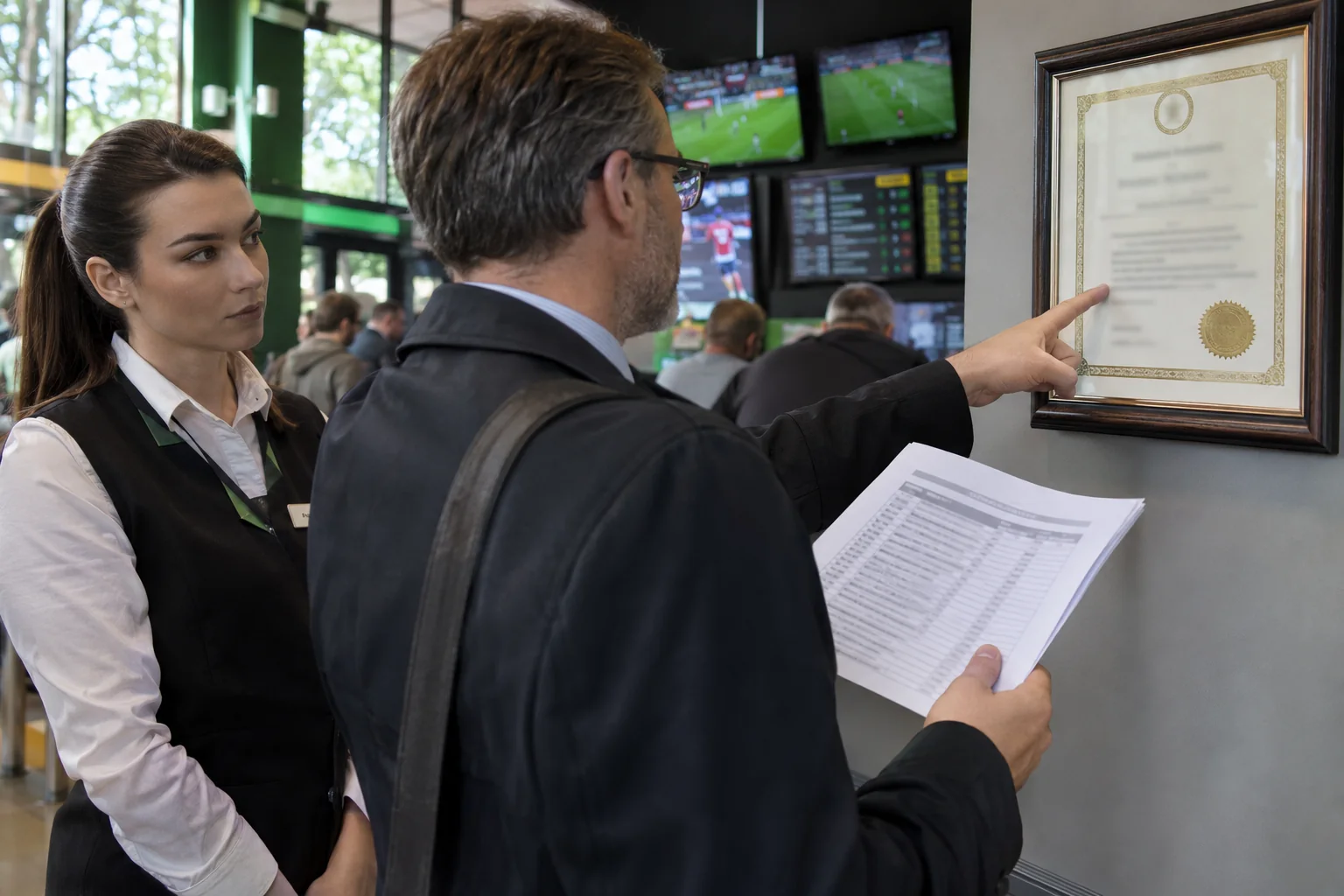
Public Licence Registers
Under Section 35 of the National Gambling Act, read alongside corresponding provincial gambling enactments, every provincial licensing authority is statutorily mandated to establish, maintain, and publish an accessible public register of all commercial licenses granted within its jurisdiction.
The public register must record:
- The full registered corporate name and trading name of the license holder.
- The South African company registration number issued by the Companies and Intellectual Property Commission (CIPC).
- The exact license category granted (e.g., Casino Operator, Bookmaker, Manufacturer, Route Operator).
- The unique official provincial license certificate reference number.
- The physical registered business address and territorial operating premises in South Africa.
- The current legal standing of the license (Active, Suspended, Under Review, or Revoked).
Checking an Operator's Licence
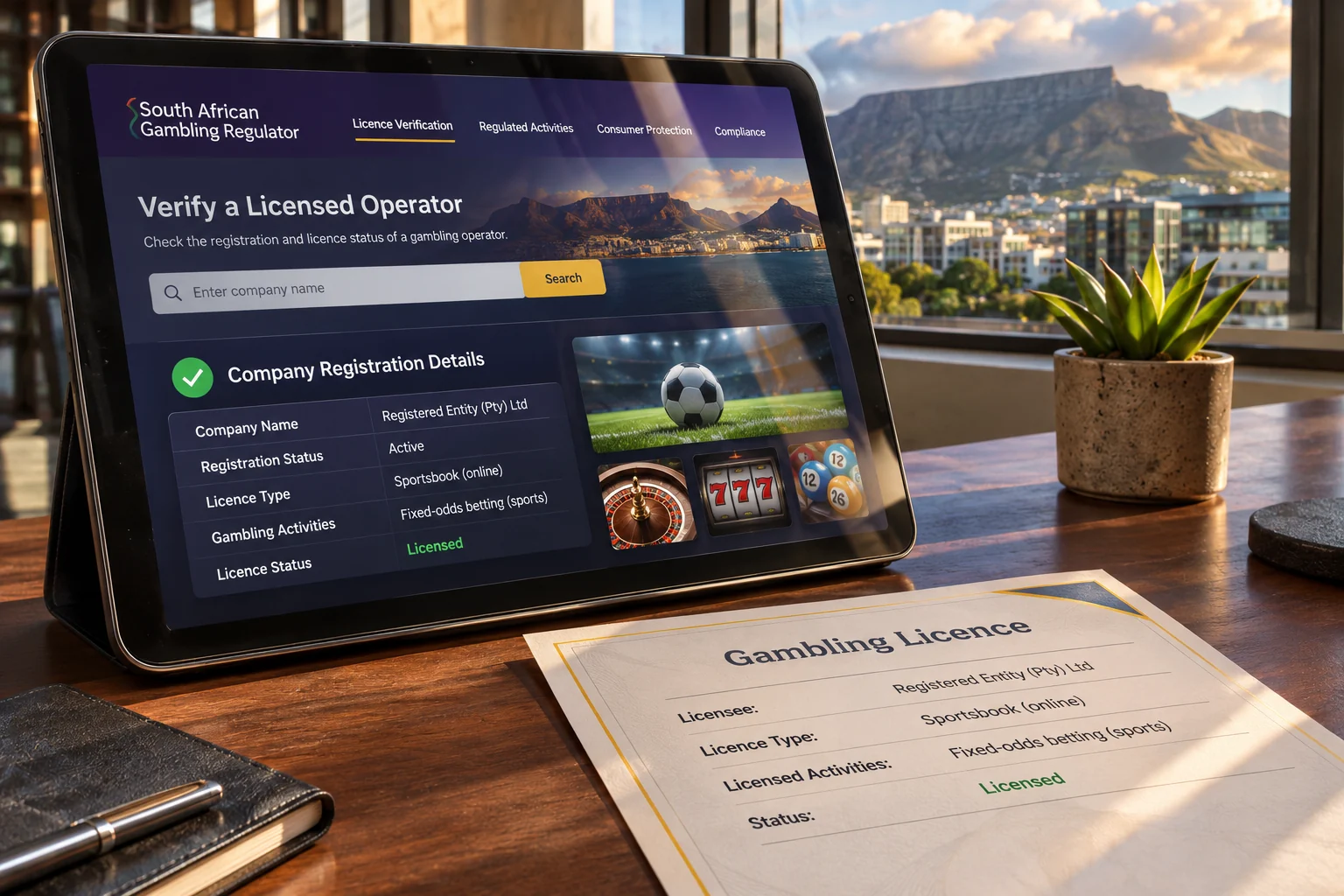
A licence check compares the operator's disclosures with provincial board records, company registration details, and payment information:
- Stage 1: Inspect Primary Footer Disclosures: Authentic South African operators display clear, detailed regulatory disclosures in the footer of every digital webpage and at physical venue entrances. Disclosures must state the specific provincial board that issued the authorization (e.g., 'Licensed and regulated by the Western Cape Gambling and Racing Board under Bookmaker License Number 10185542-003'). Generic claims like 'Licensed in South Africa' without naming the specific provincial authority are an immediate indicator of fraud.
- Stage 2: Cross-Reference Provincial Board Official Registers: Navigate directly to the official government domain of the named provincial licensing authority (e.g., wcgrb.co.za or ggb.org.za) and locate the public register of bookmakers or casinos. Verify that the corporate entity, trading name, and license number match the public register exactly.
- Stage 3: Validate CIPC Corporate Standing: Cross-reference the registered company number through the official CIPC BizPortal database to confirm that the entity is an active South African private company (Pty Ltd) with verified domestic corporate directors and a physical head office inside South Africa.
- Stage 4: Verify Payment Gateway Clearing Rails: Legitimate South African licensed operators accept deposits exclusively through registered South African financial institutions and authorized domestic payment aggregators (such as Ozow, SiD Secure EFT, PayU South Africa, or Peach Payments). If an operator instructs deposits into an international crypto wallet or a foreign wire routing number, the platform is unlicensed and illegal.
Warning: Bogus Offshore Regulatory Badges
Offshore websites frequently display deceptive badges claiming to be 'Regulated by the Curacao Gaming Control Board' or 'Licensed by the Malta Gaming Authority'. These foreign badges have zero statutory validity in South Africa. If a website does not hold a license from one of South Africa's nine provincial boards, it is illegal under Section 11 of Act 7 of 2004.
Clone Sites and False Regulatory Claims

Cybercrime syndicates frequently construct clone websites that mirror the branding, logos, and layouts of legitimate South African bookmakers:
| Verification Indicator | Authentic Licensed Operator | Fraudulent Clone / Offshore Operator | Statutory Verification Action |
|---|---|---|---|
| Website Domain | Official domain (typically ending in .co.za) | Suspicious top-level domains (.top, .xyz, .cc, .is) | Inspect domain WHOIS registration via registry.net.za |
| Licensing Authority | Names specific provincial board (e.g., GGB, WCGRB) | Generic claims ('Licensed in Curacao', 'International License') | Cross-reference provincial board online public registry |
| Customer Verification | Mandatory FICA ID and proof of address verification | No identity verification required to deposit or play | FICA compliance is mandatory for all legal operators |
| Banking Methods | Direct South African EFT via FNB, Standard, Absa, Nedbank | Offshore wire transfers, unvetted e-wallets, crypto only | Banks block unauthorized gambling merchant codes |
| Responsible Gaming | Prominently displays official SARGF crisis counseling credentials | Displays generic international support logos (e.g., GamCare UK) | SARGF affiliation is a mandatory condition of license |
Table 4: Comparative verification checklist to identify authentic South African gambling operators.
Verifying Digital Certificates
A padlock in the browser shows that the connection uses TLS; it does not prove the betting site is licensed. Check the provincial board's register, then make sure the website domain matches the operator's official address.
The certificate details must explicitly list the registered South African operating company name and verify encryption strength. Legitimate South African bookmakers maintain official domain registrations verified under the .za Domain Name Authority (ZADNA), providing verifiable administrative contact details through the central co.za registry database.
Checking Barcodes on Gaming Devices
In land-based gaming venues, physical verification extends to individual gaming hardware. Every slot machine, limited payout machine, and live gaming table layout in South Africa must carry an official provincial gambling board serialized metallic asset tag or tamper-evident barcode decal.
A venue's licence or equipment label can help identify the operator, but a printed badge is not enough. Confirm the licence with the issuing provincial authority.
Checking Gaming Equipment Certification
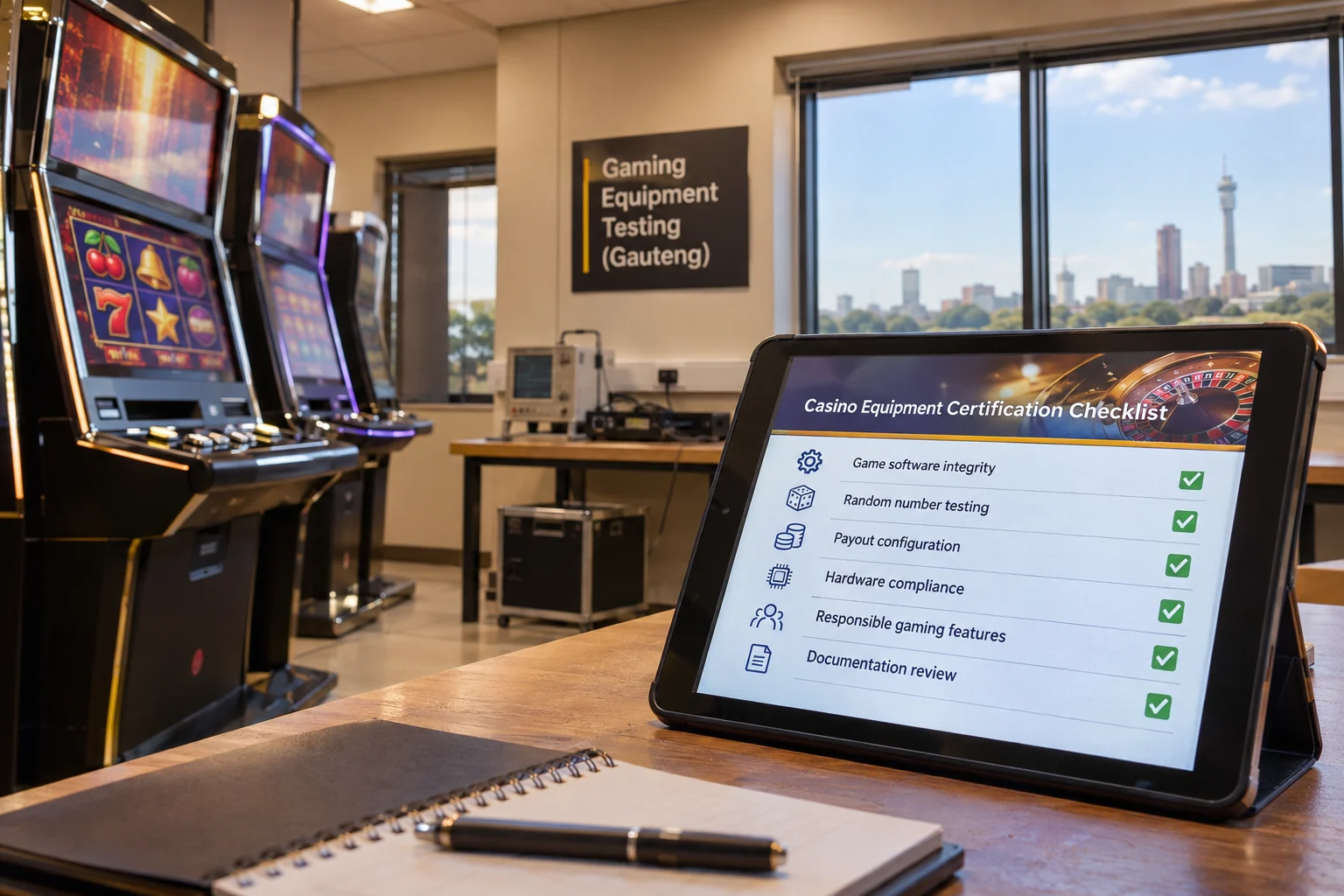
In land-based casinos and Limited Payout Machine venues, physical gaming hardware must display certified regulatory compliance markers:
- SANS 1718 Compliance Stamps: Slot machines and LPM terminals must display tamper-evident metallic inspection seals issued by the accredited testing laboratory (such as GLI Africa or BMM Testlabs), certifying compliance with South African National Standard SANS 1718.
- Provincial Board Barcode Decals: Machines must carry an official serialized barcode decal affixed by provincial board inspectors, linking the physical hardware to the provincial asset database and the Central Electronic Monitoring System (CEMS).
- Digital Game Math Certificates: For digital bookmakers offering fixed-odds contingency wagers on live numbers draws, the underlying random number generator (RNG) must possess a valid, unexpired Certificate of Analysis from an approved testing lab verifying statistical randomness.