

Offshore Gambling Operators
A foreign gambling licence does not authorise an online casino to offer interactive games to players in South Africa. The operator's place of registration or server location does not by itself remove the activity from South African law.

The Extraterritorial Jurisdiction Principle
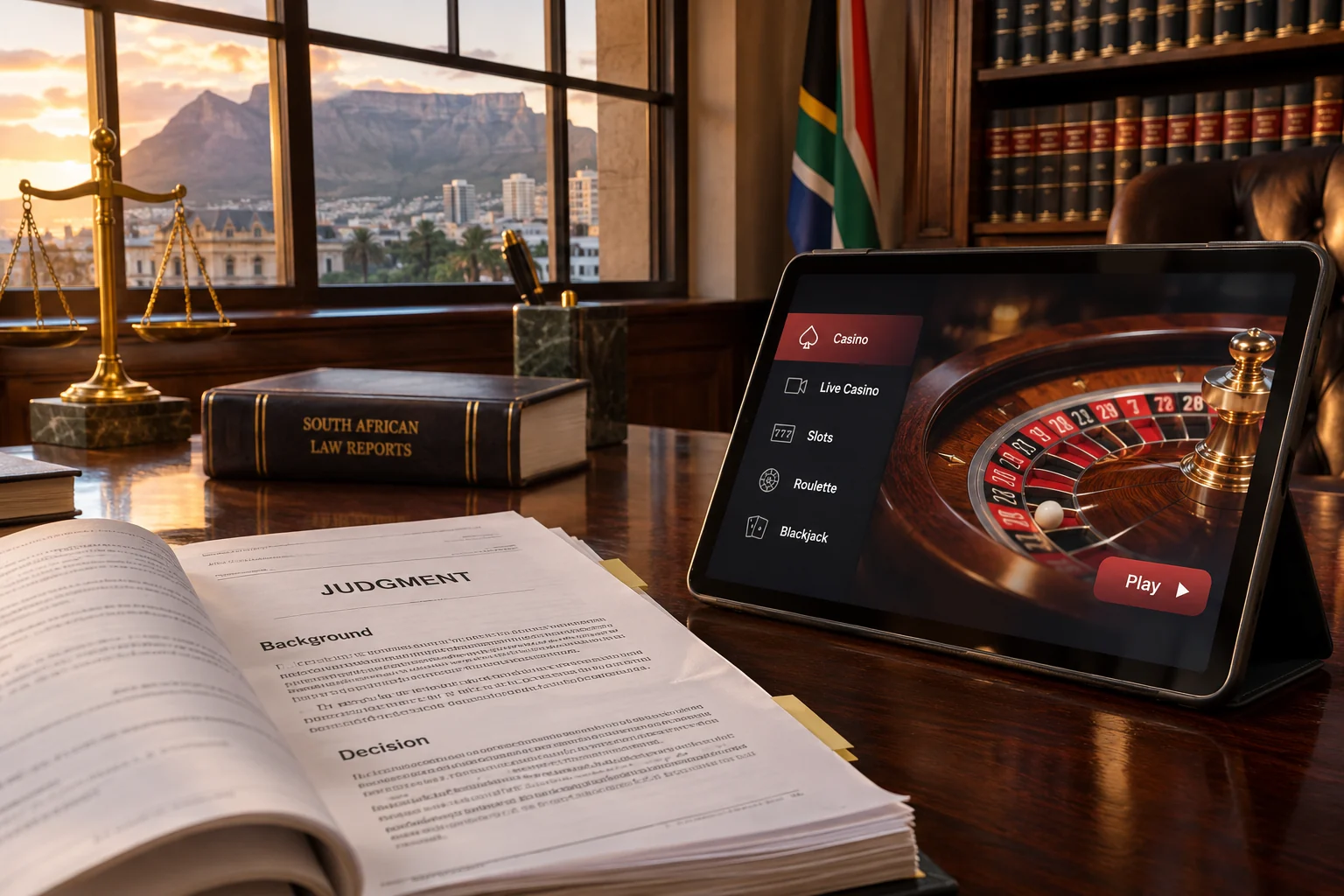
For years, foreign online casinos attempted to evade South African statutory reach by claiming that their business operations occurred beyond the borders of the Republic. Operators argued that because their corporate parent companies were incorporated in offshore jurisdictions, their physical computer servers were situated abroad, and their bank accounts were held in foreign financial capitals, South African gambling laws could not apply to their transactions.
This jurisdictional defense was comprehensively dismantled and permanently rejected by the highest judicial authorities in South Africa.
Casino Enterprise v Gauteng Gambling Board

The definitive legal precedent establishing South Africa's extraterritorial authority over offshore gambling is the Supreme Court of Appeal decision in Casino Enterprise (Pty) Ltd v Gauteng Gambling Board [2011] ZASCA 155.
The appellant, Casino Enterprise, operated popular internet casino portals under the brand names Piggs Peak Casino and Volcano Casino. The corporate entity was incorporated in the Kingdom of Swaziland (now Eswatini) and held a commercial casino license issued by the Swaziland licensing authority. Its computer servers were located in Swaziland, and financial transactions were cleared through Swazi bank accounts.
The company argued that when a South African resident wagered on its website, the gambling contract was concluded in Swaziland where the server processed the wager, placing the activity outside the reach of the National Gambling Act 7 of 2004.
The Supreme Court of Appeal unanimously dismissed the appeal. Judge of Appeal Navsa delivered the judgment, ruling that:
- A gambling transaction cannot be artificially dissected into separate geographic components to defeat statutory public policy.
- Where a player located in South Africa inputs personal details, wagers real funds, and views game outcomes on a computer monitor or mobile device in South Africa, an integral and indispensable element of the gambling activity takes place within the Republic.
- Consequently, the foreign operator makes gambling available within South Africa in direct violation of Section 11 of the National Gambling Act, committing a criminal offense punishable under South African law.
Casino Enterprise [2011] ZASCA 155
Offshore servers did not shield the operator in Casino Enterprise. The Supreme Court of Appeal treated the player's actions in South Africa as a local part of the gambling transaction.
Foreign Licences and South African Law
Offshore gaming websites frequently display licensing seals from prominent international regulatory authorities. Consumers must understand why these licenses carry no legal authority in South Africa:
| International Jurisdiction | Typical Licensing Body | Scope of Foreign License | Legal Standing in South Africa |
|---|---|---|---|
| Curacao | Curacao Gaming Control Board | Authorizes offshore operations globally | Zero Legal Validity inside South Africa |
| Malta | Malta Gaming Authority (MGA) | Authorizes EU & select international play | Zero Legal Validity inside South Africa |
| Isle of Man | Gambling Supervision Commission | Authorizes international gaming operations | Zero Legal Validity inside South Africa |
| Gibraltar | Gibraltar Regulatory Authority | Authorizes UK and international services | Zero Legal Validity inside South Africa |
| Kahnawake | Kahnawake Gaming Commission | Authorizes sovereign tribal hosting | Zero Legal Validity inside South Africa |
Table 4: International gaming licenses and their complete lack of legal validity under South African law.
Under the South African Constitution, commercial gambling authorization is reserved exclusively for entities holding formal licenses issued by the relevant statutory organ of state: the National Lotteries Commission for state lotteries, or one of the nine provincial gambling boards for casinos and bookmakers. No foreign sovereign or offshore regulatory body possesses constitutional authority to authorize gambling inside South Africa.
Offshore Operators' Deceptive Marketing
Offshore portals employ aggressive, misleading marketing strategies designed to deceive South African consumers into believing they are using authorized domestic services:
- Currency Exploitation: Displaying account balances, bonuses, and betting limits in South African Rand (ZAR) to mask their foreign incorporation.
- Local Banking Logos: Featuring unauthorized corporate logos of South African banks (FNB, Standard Bank, Absa, Nedbank) on deposit pages, implying formal regulatory partnerships that do not exist.
- Affiliate Networks: Paying substantial commissions to local digital affiliate marketers and SEO portals that publish fraudulent 'top 10 legal South African online casinos' directories.
- Misleading Terminology: Labeling unlicensed offshore platforms as 'South African casinos' merely because the website accepts South African traffic.
Financial and Consumer Risks
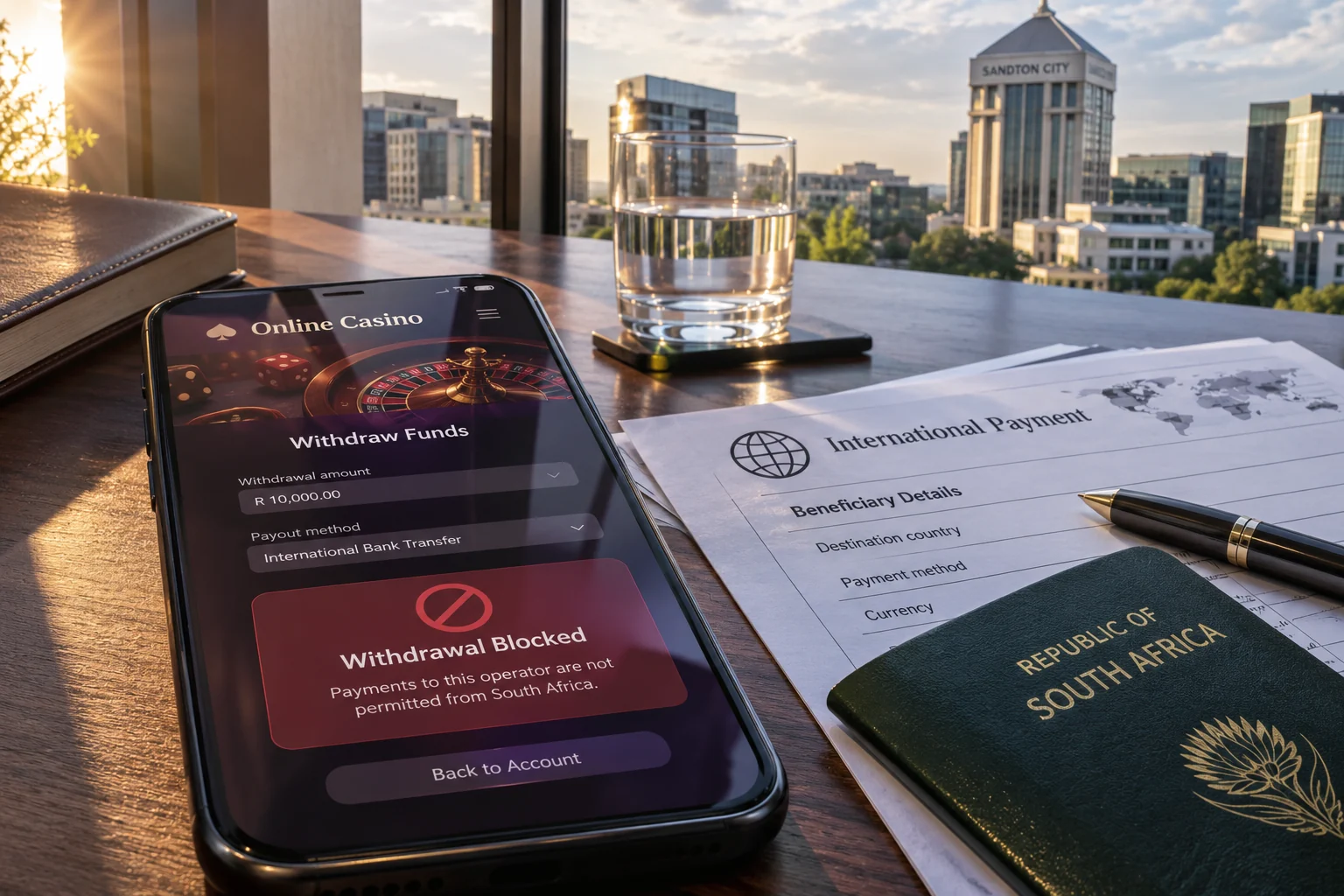
Engaging with offshore gambling portals exposes South African residents to financial and operational risks:
- Arbitrary Fund Withholding: Offshore operators frequently refuse withdrawal requests, citing obscure clauses in their foreign terms and conditions, or simply terminating customer accounts without explanation.
- Zero Domestic Recourse: Because the operator maintains no legal presence, registered assets, or corporate directors in South Africa, domestic provincial gambling boards and the National Consumer Commission hold no jurisdiction to intervene or enforce payments.
- Unenforceability in South African Courts: Under the common law doctrine of in pari delicto, South African courts will not enforce gambling debts or payout disputes originating from illegal contracts.
- Statutory Fund Forfeiture: Under Section 16 of the National Gambling Act, any payout processed through South African commercial banking channels is subject to immediate interception and state forfeiture.
Four Checks for Offshore Platforms
Perform this essential diagnostic before entering payment details on any online gambling portal:
Examine Footer for Specific South African Provincial Board Credentials
Verify the explicit mention of a South African provincial board (e.g., WCGRB, GGB, KZNGBB). Reject platforms citing only Curacao, MGA, or Cyprus.
Statutory Reference: Schedule 4 Constitution & Provincial Gambling ActsCheck Domain Ownership and Physical Business Registration
Verify that the operating company possesses a registered South African CIPC business number and physical street address in South Africa.
Statutory Reference: Companies Act 71 of 2008 & Provincial Licensing StandardsVerify Payment Gateway Authentication and FICA Integration
A licensed South African bookmaker should provide the identity checks required by its licence and FICA obligations. Check the provincial register before relying on payment logos or a familiar brand.
Statutory Reference: Financial Intelligence Centre Act 38 of 2001Confirm Dispute Escalation Jurisdiction to Provincial Authorities
Read the dispute terms before depositing. A foreign arbitration clause may make recovery harder than a complaint to a South African provincial regulator.
Statutory Reference: Promotion of Administrative Justice Act 3 of 2000