

Risks of Unregulated Betting Sites
Unlicensed gambling sites may refuse withdrawals, misstate their licence status or offer no local dispute route. Checking the operator's provincial licence before depositing is a practical first step.
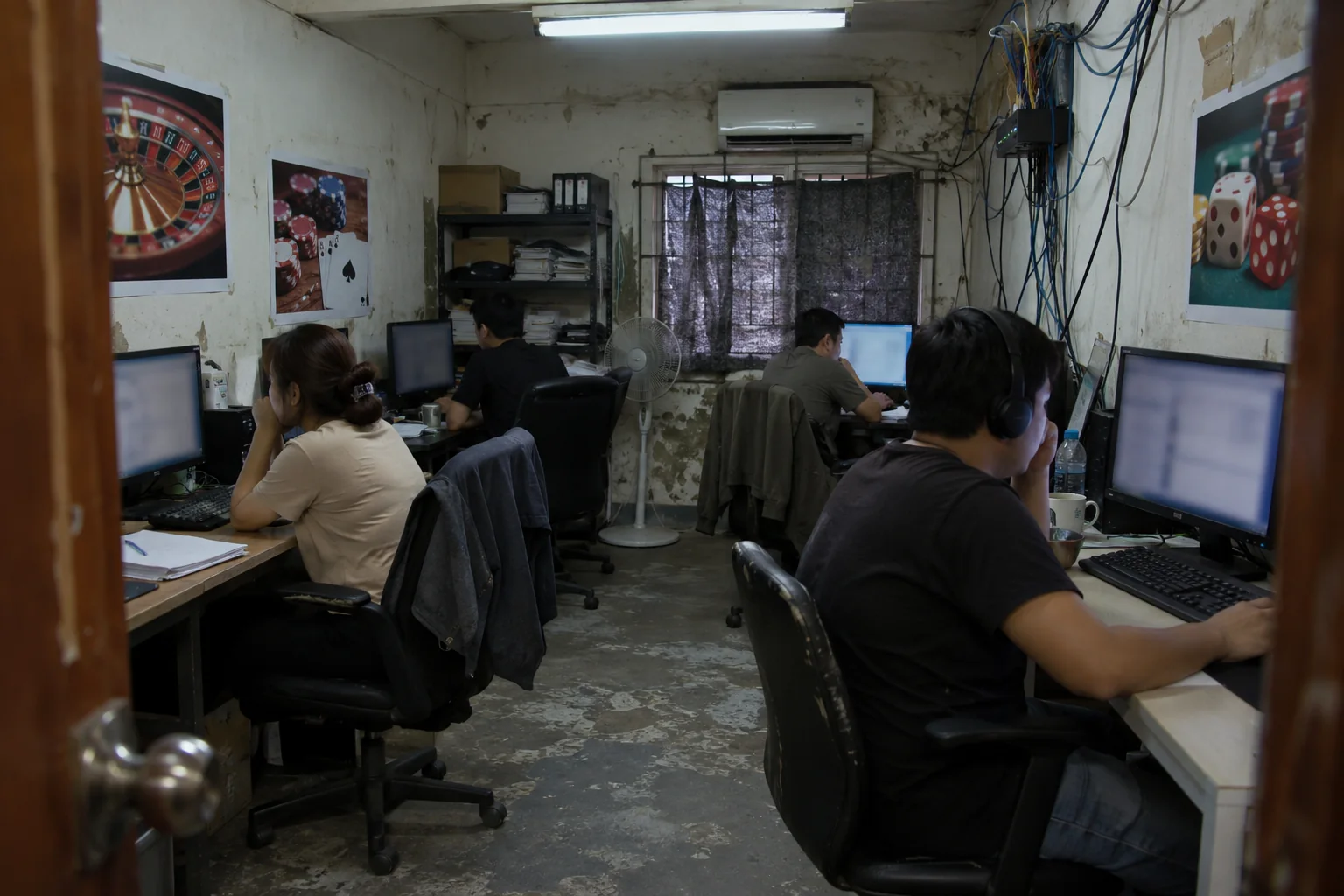
How Rogue Gaming Platforms Operate

Unlicensed gambling websites lack the local oversight that applies to licensed South African operators. Their ownership, software and terms may be difficult for players to verify:
- Shell Company Incorporation: Operating corporate entities incorporated in remote tax-haven jurisdictions (such as Curacao, Costa Rica, the British Virgin Islands, or the Comoros) that maintain no physical offices, no local customer support staff, and no verifiable executive directors.
- Unlicensed Software Integration: Using counterfeit versions of casino games or software hosted on servers without verifiable testing records, leaving payout settings unclear to players.
- Predatory Terms and Conditions: Incorporating obscure, oppressive contractual terms that grant the operator absolute discretion to void winnings, alter rules retroactively, or terminate customer accounts without cause.
Rogue Platforms' Tactics
Consumers who register on unregulated platforms frequently fall victim to sophisticated operational traps:
- The Unachievable Bonus Wagering Trap: Marketing exorbitant deposit bonuses (e.g., '400% Welcome Bonus up to R20,000') encumbered by impossible playthrough requirements (such as 60x or 80x the combined deposit and bonus amount within 7 days), ensuring that players inevitably exhaust their balances before fulfilling withdrawal conditions.
- Arbitrary Payout Maximums: Enforcing hidden withdrawal ceilings that restrict cashouts to nominal weekly amounts (e.g., R5,000 per week), ensuring that a player who strikes a major progressive jackpot would require decades to receive their full payout, during which the platform inevitably defaults or disappears.
- Phantom KYC Verification Delays: When a customer submits a valid withdrawal request, customer support demands repetitive, increasingly absurd documentation (such as notarized utility bills, bank letters signed in wet ink, or selfies holding passports under specific lighting), deliberately delaying payouts until the frustrated player wagers away their balance.
- Retroactive Rule Changes: Falsely accusing winning players of 'irregular betting patterns' or 'bonus abuse' to justify the unilateral voiding of substantial winning balances.
Warning: Counterfeit Software and Rigged Code
Counterfeit casino software may display familiar game artwork while using different payout settings. Without a verifiable licence and testing certificate, players cannot confirm the stated Return to Player (RTP).
Asset Recovery Impediments and Legal Barriers

When an individual suffers financial theft or wrongful non-payment by a rogue offshore operator, the obstacles to asset recovery through civil legal proceedings are virtually insurmountable:
| Recovery Stage | Domestic Licensed Operator | Rogue Offshore Platform | Legal Barrier Confronting the Victim |
|---|---|---|---|
| Jurisdiction | High Court of South Africa has direct authority | Foreign tax haven; no South African legal presence | South African courts hold no personal jurisdiction over foreign entity |
| Service of Process | Standard sheriff delivery to registered domestic office | Complex international service under Hague Convention | Service costs routinely exceed hundreds of thousands of rand |
| Enforceability | Direct execution against South African bank accounts | Void ab initio under South African common law | Courts apply in pari delicto rule, dismissing claims on illegal contracts |
| Asset Tracing | Transparent corporate balance sheets and CIPC records | Nominee corporate shell networks and crypto mixers | Complete opacity of corporate beneficial ownership |
| Regulatory Recourse | Free adjudication by provincial gambling boards | Zero consumer protection under foreign offshore registries | Offshore licensing registries (e.g., Curacao) rarely intervene in disputes |
Table 4: Comparative asset recovery analysis: Domestic licensed operators vs. rogue offshore platforms.
Recovery and account security
Can the National Consumer Commission help recover money lost to a rogue offshore casino?
No. The National Consumer Commission (NCC) enforces the Consumer Protection Act within South Africa. It possesses no extraterritorial jurisdiction over offshore corporations, and statutory gambling disputes fall under the specialized jurisdiction of provincial gambling boards.
What should I do if a rogue gambling site compromises my credit card details?
Contact your South African commercial bank immediately to cancel and freeze the compromised card, report the unauthorized transactions to the bank's fraud division, and monitor your credit profile through certified credit bureaus.
Why do international licensing bodies like Curacao eGaming not help South African players?
An offshore licence gives no South African regulator authority over the operator. A player may have to pursue a dispute through a foreign regulator or court, which can be costly.
In Pari Delicto in South African Courts
A claim against an offshore casino can be costly. The common-law principle of in pari delicto potior est conditio defendentis may also complicate recovery if the underlying gambling was unlawful in South Africa.
Because Section 11 of the National Gambling Act prohibits unauthorised interactive gaming, an online casino contract is unlawful and void from its inception. South African courts will not enforce illegal contracts, nor will they assist an individual who voluntarily engaged in an unlawful activity in recovering losses or compelling payment of disputed winnings.
Data Sales and Credential Attacks
The financial risks associated with rogue platforms extend far beyond the loss of initial gambling deposits. Unregulated gaming portals operate with minimal cybersecurity infrastructure, and many deliberately harvest customer identity profiles to monetize through illicit secondary channels.
A data breach can expose the identity, address and payment details given to a gambling site. Reused passwords also make other accounts vulnerable to credential-stuffing attacks.
Costs of Cross-Border Litigation
Serving a claim on a foreign operator and enforcing a judgment abroad can be slow and expensive. The process depends on where the company is registered and where its assets are held.
Legal fees for retaining international private investigators, local offshore attorneys, and specialized cross-border commercial litigators rapidly escalate into hundreds of thousands or millions of rand. Because the disputed gambling winnings or lost deposits are typically dwarfed by these legal costs, pursuing recovery through international litigation is economically irrational and practically impossible for private individuals.
Data Privacy Hazards and Identity Theft Risks
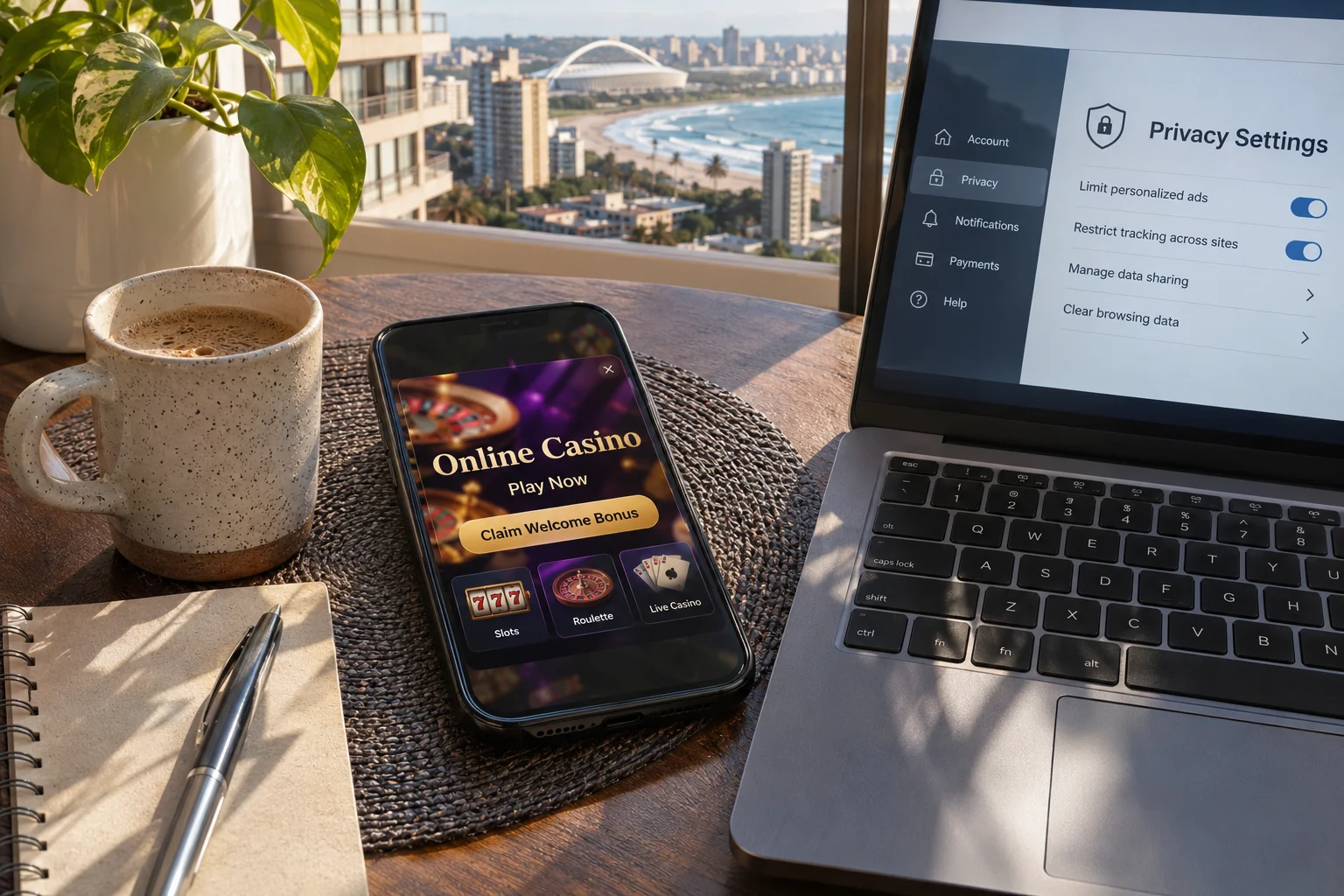
Engaging with rogue platforms creates data privacy risks. When registering on unvetted websites, consumers surrender sensitive personal information:
- High-resolution scans of South African Smart ID cards, passports, and driver's licenses.
- Full residential utility bills showing physical street addresses.
- Credit and debit card numbers, expiration dates, and CVV security codes.
An offshore site can expose the identity and payment data listed above. South Africa's Protection of Personal Information Act 4 of 2013 (POPIA) may be difficult to enforce against an operator with no local presence.
Five Red Flags of Offshore Gaming Sites
INSTANT DISQUALIFIERS- Platform operates with no valid South African provincial gambling board license number in its footer
- Terms and conditions include predatory clauses allowing the site to void winnings or cap payouts at arbitrary limits
- Customer support operates exclusively via anonymous Telegram bots, unsecured web forms, or non-responsive chat widgets
- The casino uses pirated slot software hosted on unauthorized, uncertified private servers lacking SANS 1718 testing seals
- Withdrawal requests trigger unexpected demands for upfront 'handling fees', 'tax deposits', or additional crypto payments