

Penalties for Unlawful Gambling
Playing on an unlicensed casino site in South Africa can expose a player to investigation and forfeiture of unlawful winnings. The legal and payment risks differ from those of betting with a provincially licensed bookmaker.
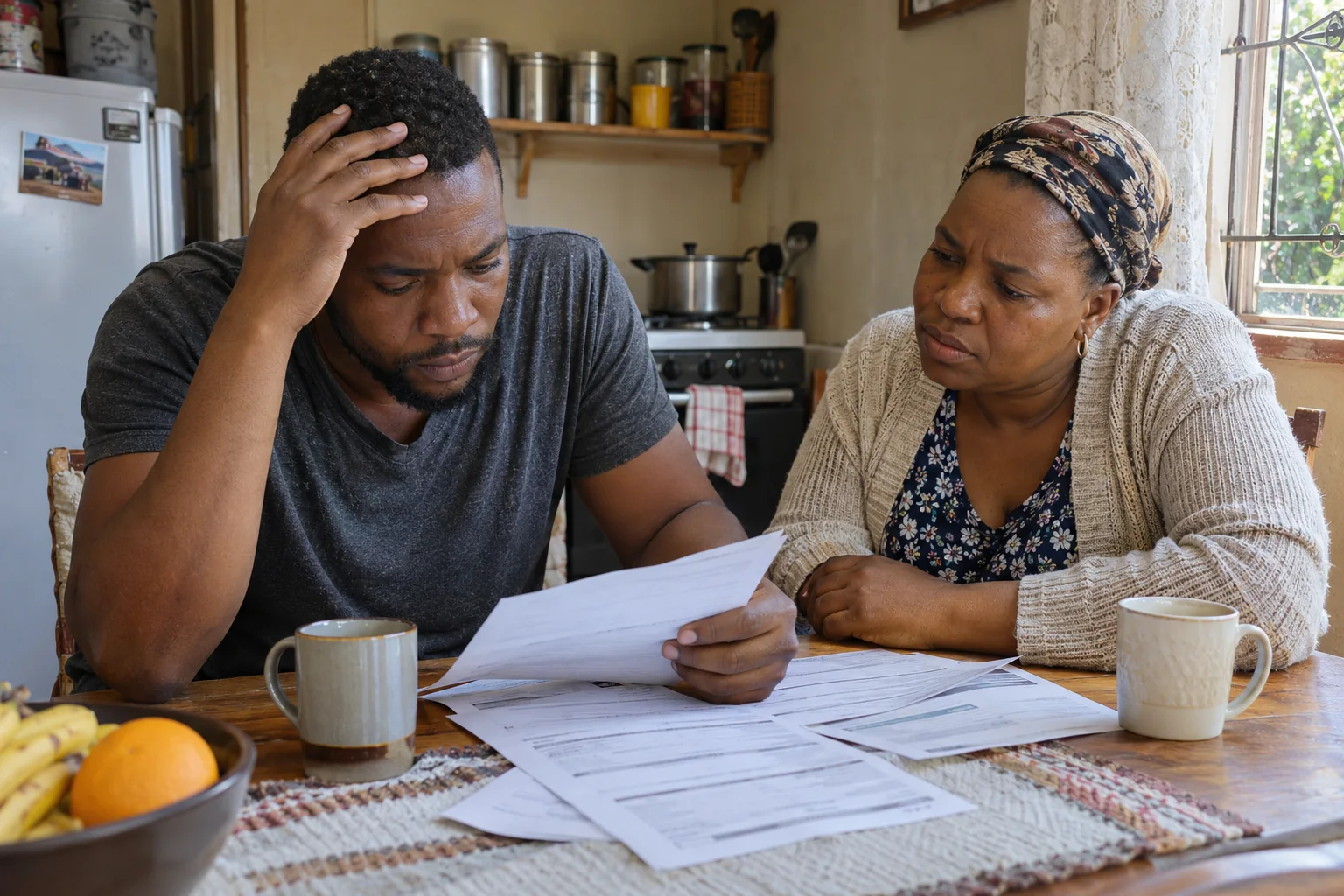
Criminal Liability for Unlawful Gambling
A persistent legal misconception among South African consumers is that the law targets solely the 'house' or operating company. This misconception is directly contradicted by the express wording of Section 82 of the National Gambling Act 7 of 2004:
"A person who contravenes, or fails to comply with any provision of this Act, commits an offense, and is liable on conviction to a fine not exceeding R10,000,000, or to imprisonment for a period not exceeding 10 years, or to both such fine and such imprisonment."
Because Section 11 of the Act prohibits any person from engaging in or making available an unauthorised interactive game, an individual who registers an account, wagers real money, and plays online slots or virtual roulette commits a direct statutory crime.
Risk of Forfeiting Unlawful Winnings
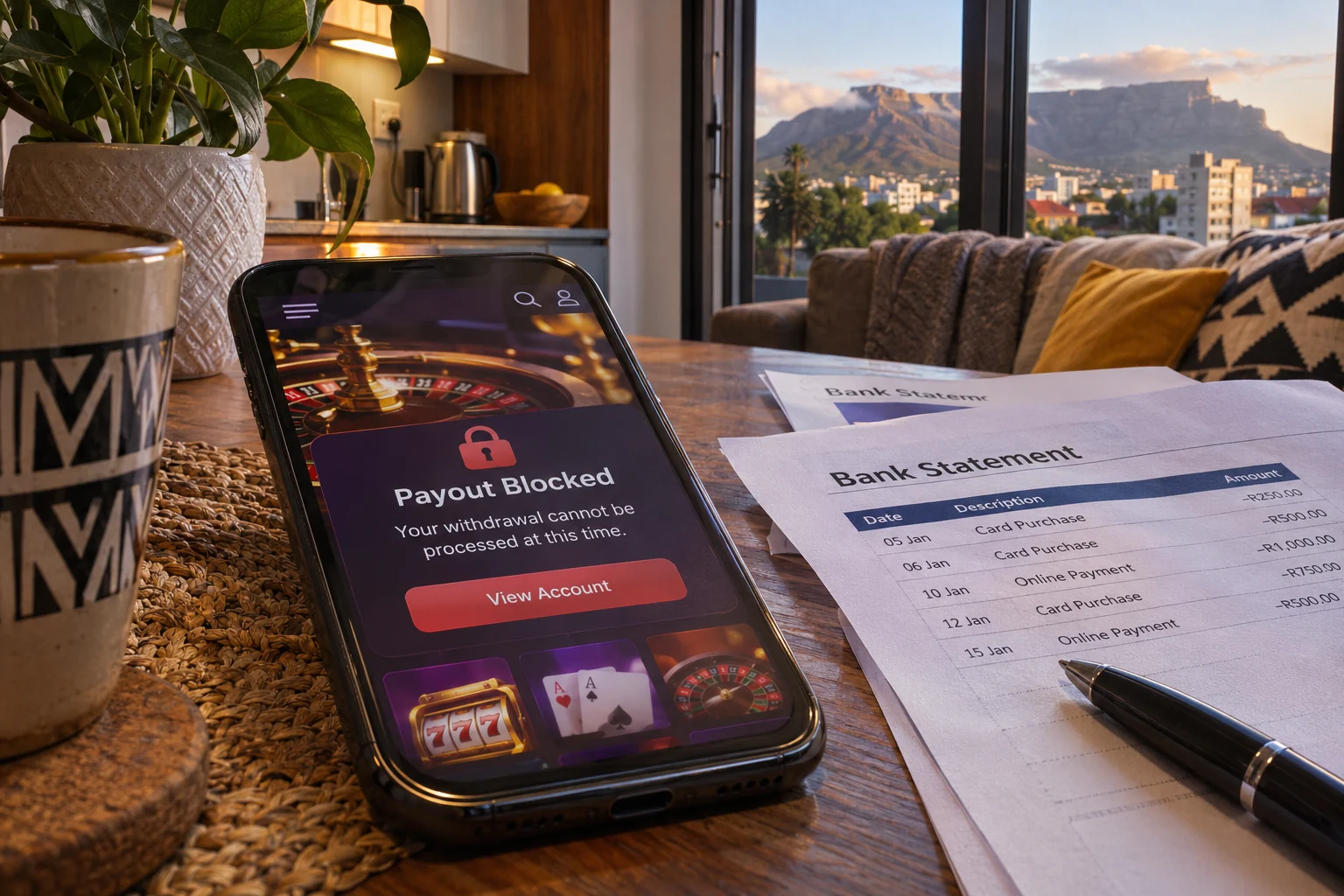
The most immediate financial consequence confronting participants in unauthorized gambling is the asset forfeiture mechanism established by Section 16 of the National Gambling Act:
- Statutory Nullity of Winnings: Under Section 16(1), any monetary amount won by any person through unlawful gambling activity is unlawful and does not vest in that person. The player never acquires lawful title or legal ownership of the money.
- Mandatory Banking Interception: Commercial clearing banks (including Standard Bank, FNB, Absa, Nedbank, and Capitec) are statutorily required to identify transactions originating from unlicensed gambling merchants. Incoming wire transfers and card credits are automatically placed into holding suspense accounts.
- Forfeiture to the State: The intercepted funds are reported to the National Gambling Board. The Board applies to the High Court of South Africa for a formal civil forfeiture order, transferring the money permanently into the National Revenue Fund.
Section 16 Forfeiture is Non-Refundable
When a player's winnings are forfeited under Section 16, the player is not refunded their initial deposit or stake. The entire transaction balance is confiscated by the state as the proceeds of an unlawful transaction.
In Pari Delicto and Winnings Recovery

Players also face difficulty enforcing claims against an unlicensed casino. Under South African common law, gambling contracts conducted outside statutory authorization are void ab initio for illegality.
This legal principle is reinforced by two foundational legal maxims:
- Ex Turpi Causa Non Oritur Actio: No court will enforce a claim that originates from an illegal or dishonorable cause. If an unlicensed offshore casino refuses to pay out a validly won jackpot, the player cannot institute a civil lawsuit in South African courts.
- In Pari Delicto Potior Est Conditio Defendentis: Where both parties are in equal fault regarding an unlawful contract, the position of the defendant is stronger. South African courts will not order an illegal operator to refund a player's lost deposits, nor will they order the payment of disputed winnings.
| Legal Consequence | Statutory or Common Law Basis | Enforcing Body | Operational Impact on the Individual |
|---|---|---|---|
| Criminal Conviction | National Gambling Act Section 82 | South African Police Service & NPA | Formal criminal record, fines up to R10 million, potential imprisonment |
| Total Asset Forfeiture | National Gambling Act Section 16 | National Gambling Board & High Court | Immediate seizure of all winnings and account balances into state trust |
| Bank Compliance Flagging | Financial Intelligence Centre Act | Commercial Clearing Banks (PASA) | Freezing of commercial accounts, closure of credit lines, AML monitoring |
| Loss of Civil Action | Common Law (Ex Turpi Causa Rule) | High Court of South Africa | Complete dismissal of any civil lawsuit seeking payout recovery |
| Tax Re-Assessment | Tax Administration Act 28 of 2011 | South African Revenue Service (SARS) | Investigation of undisclosed offshore earnings, penalty tax assessments |
Table 2: Possible legal consequences for people involved in unlawful gambling.
Work and Licensing Consequences
A criminal conviction can affect some jobs or professional licences, depending on the employer's rules and the relevant regulator. Investigation alone does not automatically disqualify a person.
Evidence in Asset Forfeiture Cases
In civil forfeiture applications brought under Section 16 of the National Gambling Act, the legal standard of proof differs significantly from criminal proceedings. Unlike criminal trials where the state must prove guilt beyond reasonable doubt, Section 16 civil forfeiture applications in the High Court are adjudicated on a balance of probabilities.
Section 16 governs unlawful winnings. A bank or regulator must follow the applicable process before funds are finally forfeited; the outcome depends on the evidence.
Liability and cross-border winnings
Has the National Gambling Board actually forfeited player winnings in South Africa?
Yes. The National Gambling Board routinely petitions the High Court for civil forfeiture orders under Section 16, resulting in millions of rand in illicit winnings confiscated from individuals and transferred into the National Revenue Fund.
Can a player be arrested for using an offshore gambling app on their mobile phone?
Yes. Section 11 of the National Gambling Act prohibits unauthorised interactive gaming within the Republic. Playing on an offshore casino app while located in South Africa constitutes an offense under Section 82.
If an illegal casino pays winnings into a foreign bank account, is it safe from South African authorities?
No. South Africa participates in the global Common Reporting Standard (CRS), where foreign tax authorities share bank account information automatically with SARS. Undisclosed foreign gambling income violates both exchange control laws and tax statutes.
Tax Penalties and SARS Audits
Offshore gambling receipts can raise tax and reporting questions. Treatment depends on the facts, so keep records and seek qualified advice if substantial sums are involved.
Under the Tax Administration Act 28 of 2011 and the Common Reporting Standard (CRS) for international tax transparency, foreign bank accounts and electronic payment wallets held by South African tax residents are reported automatically to SARS. Unexplained incoming wire transfers from foreign gaming aggregators are treated as undisclosed foreign income, triggering retrospective income tax assessments, penalty interest up to 200%, and potential criminal prosecution for tax evasion.
Psychological Risks and Missing Safeguards

Beyond financial and criminal penalties, participants in illegal gambling face psychological harm. Unlicensed platforms operate without responsible gambling controls. They do not connect to the National Excluded Persons Register, do not implement mandatory cooling-off periods, and actively employ algorithmic behavioral tracking to target losing players with aggressive promotional bonuses.
Player Liability: Penalties and Forfeiture
| User Scenario | Failure Mode & Trap | Statutory Sanction & Mechanism | Preventative Remedy |
|---|---|---|---|
| Player deposits R15,000 to offshore casino using Standard Bank debit card | Transaction processed under disguised merchant code; player hits R120,000 jackpot | Bank compliance intercepts withdrawal; funds frozen under SARB Reg 10(1)(c) and forfeited under Section 16 | Stick strictly to sportsbooks possessing 9-digit provincial board licenses with domestic clearing |
| Individual participates in real-money digital poker tournament from home | Believing private peer-to-peer card games fall outside statutory prohibitions | Interactive gambling prohibition applies to all electronic real-money poker; player subject to Section 82 charges | Play poker exclusively in licensed physical casino card rooms authorized under provincial quotas |
| Punter borrows money or accepts credit line from an unlicensed bookmaker | Seeking to finance wagering through informal credit or delayed payment | Severe breach of Section 13 credit restriction; high risk of extortion and loss of consumer protection | Never gamble on credit; provincial regulations require all accounts to be pre-cleared with cleared funds |
| Customer attempts to sue foreign slot website in Johannesburg High Court | Filing breach of contract summons against Curacao operating company | Case dismissed under ex turpi causa non oritur actio; customer ordered to pay taxed costs of legal counsel | Only gamble with operators subject to provincial administrative tribunal enforcement |