

Provincial Gambling Regulators
South Africa's nine provincial gambling authorities licence and oversee casinos, bookmakers and other approved operators in their provinces. They inspect venues and handle complaints about their licensees.
Provincial Licensing Powers
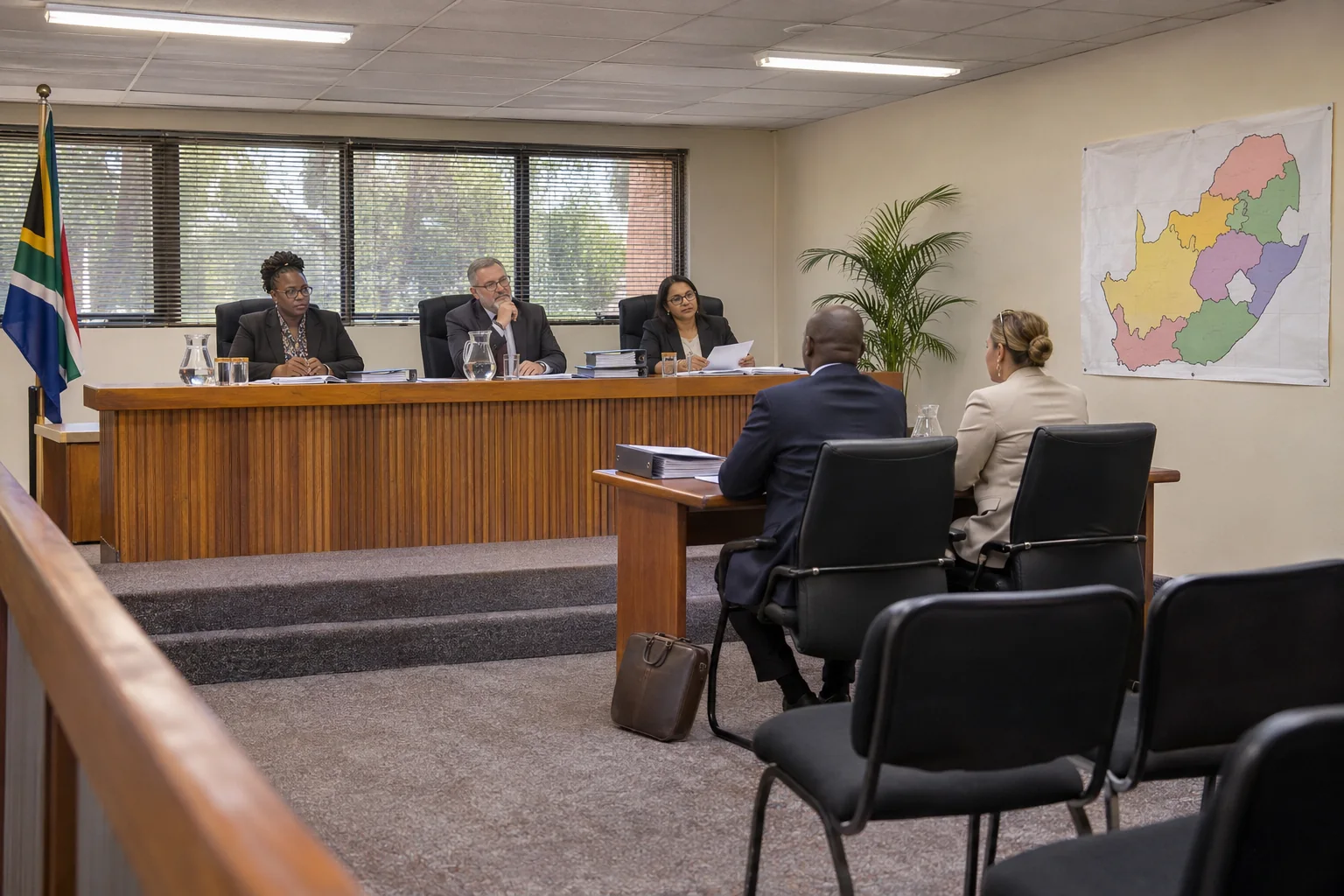
Schedule 4 of the Constitution gives national and provincial governments concurrent authority over casinos, racing, gambling and wagering. The National Gambling Act sets national norms; provincial authorities issue licences and oversee local operators.
Each provincial board operates as an autonomous organ of state governed by a Board of Directors appointed by the provincial Member of the Executive Council (MEC) responsible for economic development and finance. The boards maintain dedicated full-time inspectorates, legal compliance divisions, and financial auditing directorates empowered to enforce statutory conditions of license.
Nine Provincial Licensing Boards
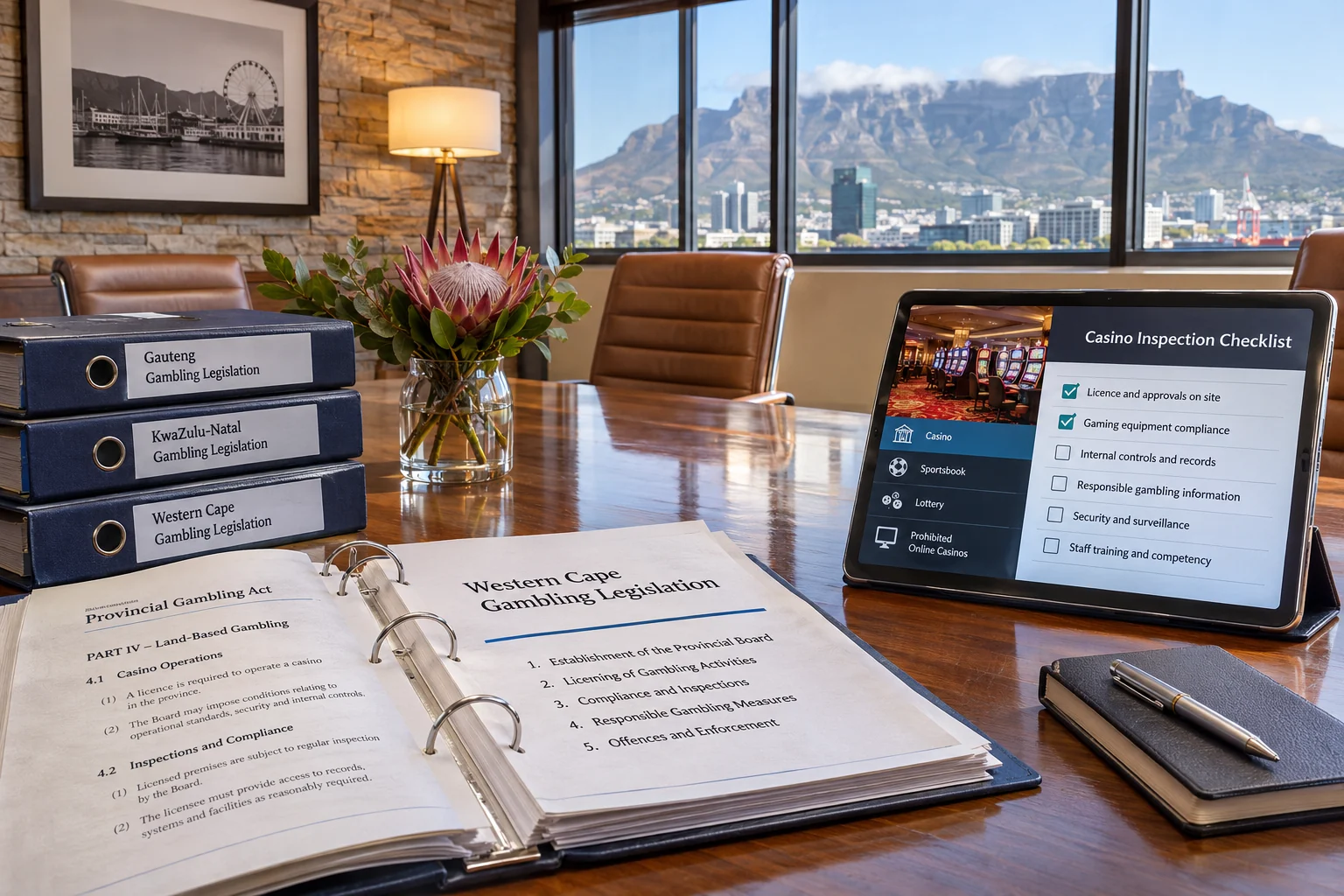
Every commercial gambling operation in South Africa must hold a license issued by the relevant provincial regulatory body:
- Gauteng Gambling Board (GGB): Established under the Gauteng Gambling Act 4 of 1995. Headquartered in Waverley, Johannesburg, the GGB oversees the largest gambling economy in Africa, regulating seven major casino resorts (including Montecasino and Emperors Palace), extensive retail bookmaking networks, and major digital sportsbooks.
- Western Cape Gambling and Racing Board (WCGRB): Governed by the Western Cape Gambling and Racing Act 4 of 1996, operating from Fairway Close, Parow, Cape Town. Renowned for its rigorous technical standards, the WCGRB licenses GrandWest Casino alongside leading digital bookmakers, including Betway and Sportingbet.
- KwaZulu-Natal Gaming and Betting Board (KZNGBB): Established under the KwaZulu-Natal Gaming and Betting Act 8 of 2010, based in Pietermaritzburg. Regulates five casino resort properties, major thoroughbred horseracing tracks (Hollywoodbets Greyville and Scottsville), and extensive retail bookmakers.
- Eastern Cape Gambling Board (ECGB): Administers the Eastern Cape Gambling Act 5 of 1997 from Quenera Park, Beacon Bay, East London. Regulates resort casinos in Gqeberha and East London alongside rural Limited Payout Machine deployments.
- Free State Gambling, Liquor and Tourism Authority (FSGLTA): Regulates commercial gaming under the Free State Gambling and Liquor Act 6 of 2010, operating from Bloemfontein.
- Mpumalanga Economic Regulator (MER): Created through the Mpumalanga Economic Regulator Act 2 of 2017, situated in Mbombela, regulating venues such as Emnotweni and Graceland.
- Limpopo Gambling Board (LGB): Operates under the Limpopo Gambling Act 3 of 2013, based in Polokwane, overseeing Meropa Casino and northern bookmaking concessions.
- North West Gambling Board (NWGB): Governed by the North West Gambling Act 2 of 2001, situated in Mahikeng, regulating five resort concessions headlined by the Sun City complex.
- Northern Cape Gambling Board (NCGB): Administers the Northern Cape Gambling Act 3 of 2004, operating from Kimberley, regulating regional casino and bookmaking facilities.
Provincial Jurisdictional Exclusivity
A commercial casino or retail bookmaking shop authorized in one province cannot operate facilities in another province without obtaining a separate license from the recipient province's licensing board. Each physical venue is bound exclusively to its provincial statutory jurisdiction.
Licensing powers in practice
Can a bookmaker licensed by the Western Cape accept bets from a resident of KwaZulu-Natal?
A bookmaker's online reach depends on its provincial licence and applicable law. The issuing board can confirm which products and locations the licence covers.
Who appoints the members of a provincial gambling board?
Board members are appointed by the provincial Member of the Executive Council (MEC) responsible for economic development, following a public nomination and vetting process evaluating financial acumen, legal expertise, and absence of criminal records.
Can a provincial board revoke a commercial casino license?
Yes. Provincial licensing authorities have the statutory power to suspend or permanently revoke commercial licenses for severe breaches of conditions, including tax default, criminal conduct, persistent refusal to pay valid wagers, or failure to maintain B-BBEE transformation commitments.
Inspectors and Venue Audits
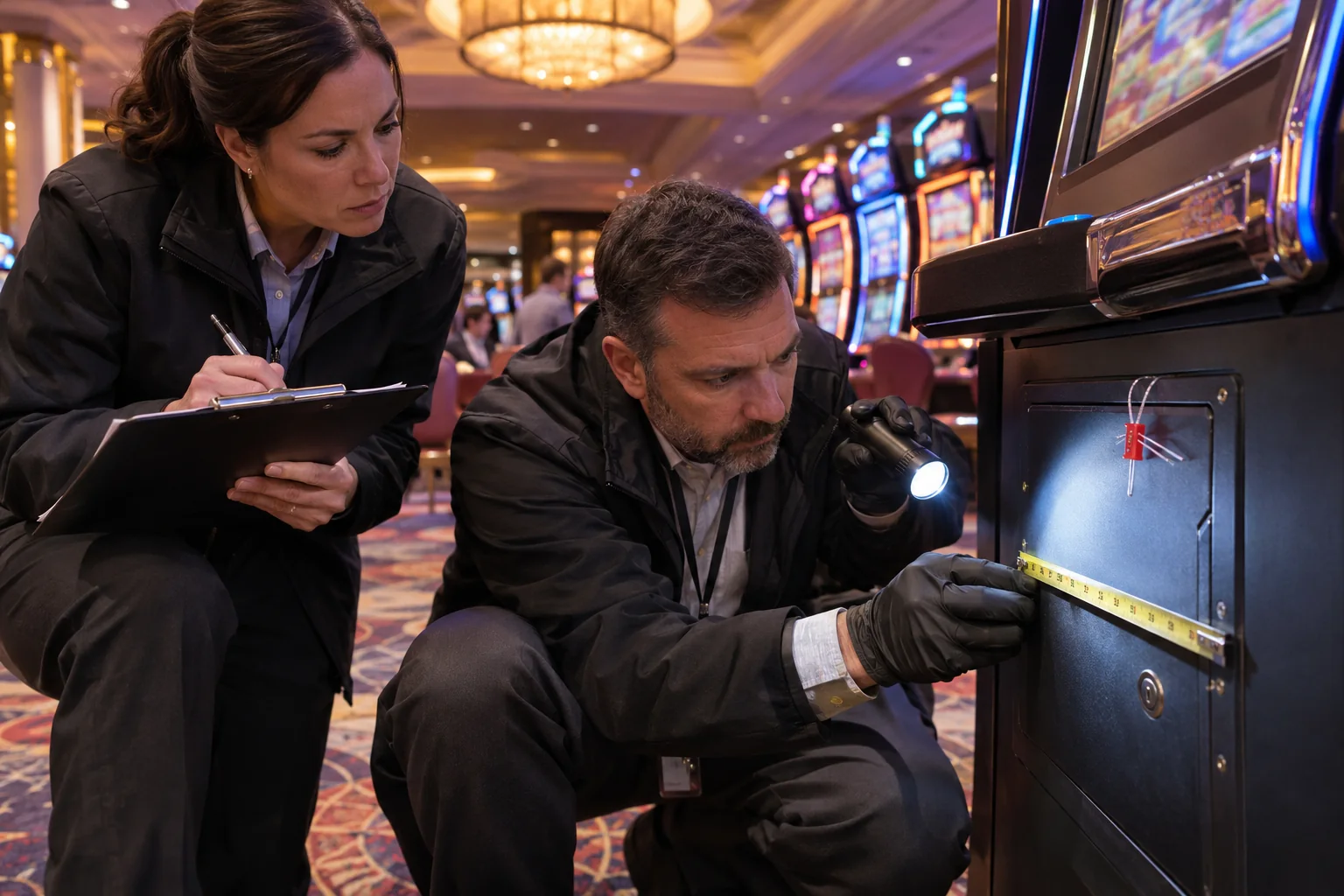
Provincial gambling boards employ permanent compliance inspectorates endowed with statutory search-and-seizure powers:
| Audit Category | Inspection Scope | Verification Frequency | Statutory Objective |
|---|---|---|---|
| Surveillance Auditing | Closed-circuit television visual coverage of table games, cages, vaults | Continuous monitoring, unannounced checks | Prevent internal theft, ensure game fairness and security |
| Slot Machine Verification | Hardware seals, firmware hash verification against SANS 1718 certificates | Quarterly on-site sampling, annual complete audit | Guarantee certified RTP, verify zero unauthorized code modification |
| Cage Drop Box Audits | Physical removal, weighing, and sorting of cash drop boxes from tables | Scheduled daily drop inspections, random spot checks | Verify tax accounting, prevent skimming and cash handling fraud |
| FICA AML Compliance | Inspection of customer identification files, STR reports, cash logs | Biannual comprehensive documentation review | Enforce compliance with anti-money laundering regulations |
| Dispute Reviews | Review of bet slips, server timestamps, electronic roulette logs | Ad hoc upon receipt of formal player complaint | Issue binding administrative determinations on disputed wagers |
Table 3: Operational compliance audit functions conducted by provincial gambling board inspectorates.
Provincial compliance officers have the legal right under provincial gaming acts to enter any licensed facility at any time without prior notice, inspect all financial and technical records, interrogate staff members, and impound any gaming equipment suspected of tampering or non-compliance.
Gaming Levies and Community Investment
Beyond direct provincial gaming taxes, provincial licensing authorities enforce mandatory Corporate Social Investment (CSI) obligations on licensed casino concessionaires and major bookmaking groups. In provinces such as Gauteng, the Western Cape, and KwaZulu-Natal, conditions of license require operators to contribute a specific percentage of annual gross gaming revenue (typically between 1% and 2.5%) toward targeted community development projects in surrounding municipal areas.
Licence conditions can include community investment commitments. The operator's published reports and the provincial board's records show what was promised and delivered.
Licence Renewals and Suitability Reviews
Commercial gambling licenses granted by provincial boards are not permanent entitlements; they are subject to periodic renewal and regular probity audits. In most provinces, commercial casino and route operator concessions undergo formal reviews every five to ten years.
Provincial boards review licence conditions and compliance records when an operator seeks renewal. Repeated breaches can lead to regulatory action under the applicable provincial law.
Provincial Gambling Revenue
Provincial gambling taxes constitute a vital source of provincial own-revenue. Because taxation schedules are enacted by provincial legislatures, tax structures reflect regional economic policy:
Gauteng applies a sliding scale on casino gross gaming revenue (GGR) starting at 9% and rising to 15% for high-earning venues. The Western Cape utilizes a progressive tax bracket reaching up to 20% on premier casino revenues.
These funds are paid directly into the respective Provincial Revenue Funds, where provincial treasuries allocate resources to finance public hospitals, regional road infrastructure, school building initiatives, and economic development grants.
Signs of Unlicensed Operators
INSTANT DISQUALIFIERS- The operator operates without an active physical office and registered agent inside the licensing province
- The bookmaker refuses to disclose its provincial license certificate number or publishing board name
- The venue offers credit betting or ATM facilities directly within the immediate gaming area
- The operator fails to maintain mandatory segregation of customer operational deposits from working capital
- The gaming house fails to file mandatory B-BBEE annual socio-economic transformation compliance reports